

Sending an invoice should be a joyful occasion. It means that you’ve been helpful to someone: they wanted your product or service and they see it’s value. Making money is important for everyone, so don’t feel guilty. You should already know how to create a simple invoice when the time comes to send one to your first customer!
But do you really need an invoice? People who sell their own products and services should issue invoices to keep track of their income. However, affiliate marketers do not issue invoices because their commissions are paid by the companies that sell the products and services that the affiliate marketers promote.
Many people do both. This post will tell you how to create a simple invoice, if you need it. There are lots of resources online, and many of them are free or low cost, so consider this a starting point to begin to understand this important aspect of business. We must start with simple things and learn as we go.

Information on your invoice
A simple invoice needs six items to be legal and clear.
- Your name and/or business name and contact details, and EIN or VAT number
- The same information for your customer
- The products and/or services you sold
- The cost (item price or fee per hour times the number of items or hours)
- When they should pay (payment terms)
- A progressive invoice number for tracking your income
The products or services that you sold are listed in the body of the invoice, with the quantities and prices. You must check with an accountant to know whether you need to apply sales tax. Every US state has different laws, so get some information before you make a mistake. If you’re working in the USA, get an EIN number to avoid giving out your social security number.
In European countries, you will need a VAT number (which stands for Value Added Tax) to do business. Technically, in Italy, self-employed workers don’t need to get a VAT number until they hit a threshold of €5000 in revenue, but websites must display a VAT number if the company does business through them.
My advice: ask for help but go ahead and build your business. Don’t wait until you have all the pieces in place. You can tweak things as you go.
Designing your invoice
If you want to customize your own invoice, I suggest using the done-for-you Excel files from Vertex42 LLC. This is not an affiliate link: everything on their website is free. This website provides lots of resources and education, including courses about how to use spreadsheets and Google docs. The Microsoft Suite also has invoice templates in Word and Excel.
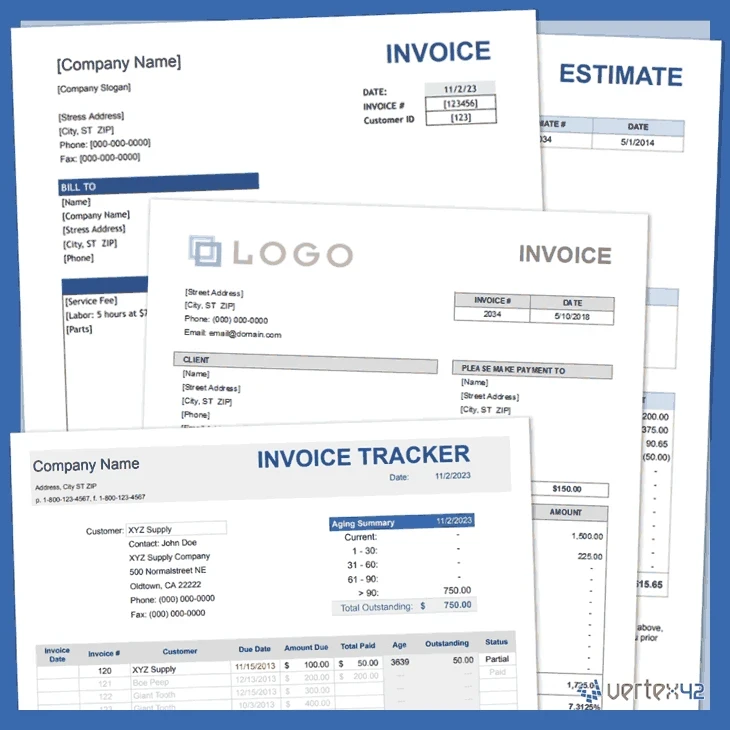
You don’t even need a logo to start out, although you will certainly want one later. Customizing the colors and structure of your invoice can also wait until you have a clearer idea of what you want. So start your business!
Bookkeeping
Make sure you record your transactions and expenses! Good records are essential for keeping track of our progress so that we can make good decisions. If you’ve never learned bookkeeping skills, well, now’s the time. And don’t worry, you’ll start out with simple math: addition and subtraction. Accounting is like organizing your closet: you have to learn where everything goes.
Caution: Using an Excel document for your invoicing involves lots of copying and proofreading. BE VERY CAREFUL: always check your numbers and dates. Make sure it is all correct. Do not hurry. EVER!
And here’s why:
One year, I accidentally issued two invoices with the number 13, but with different dates. An invoice that has been issued cannot be corrected, so we had to work around this. It won’t get you into legal trouble, but it is confusing.
International Payments
PayPal is always a good solution: it’s free and secure. Another good solution is a convenient money transfer service called Wise, which makes it possible to receive payments in other currencies without needing a bank account in those countries. You can start doing some research on these companies if you need to send invoices to clients in other countries.
Asking for professional help
Check with the Small Business Administration in the US or a tax advice office in your country to find out what the legal requirements are for opening a business, and the legal requirements for collecting payments and issuing invoices.